Introduction
Order picking is one of the most important activities in warehouse operations. It involves selecting products from storage locations to fulfil customer orders. The efficiency of this process directly affects order accuracy, delivery speed, and operating costs.
Traditionally, warehouses have relied on manual picking, where employees locate and collect products using paper lists or digital instructions. However, growing order volumes and increasing customer expectations have encouraged businesses to adopt automated picking solutions.
Both methods offer different advantages. Understanding their differences can help businesses choose the right approach for their warehouse operations.
What Is Manual Warehouse Picking?
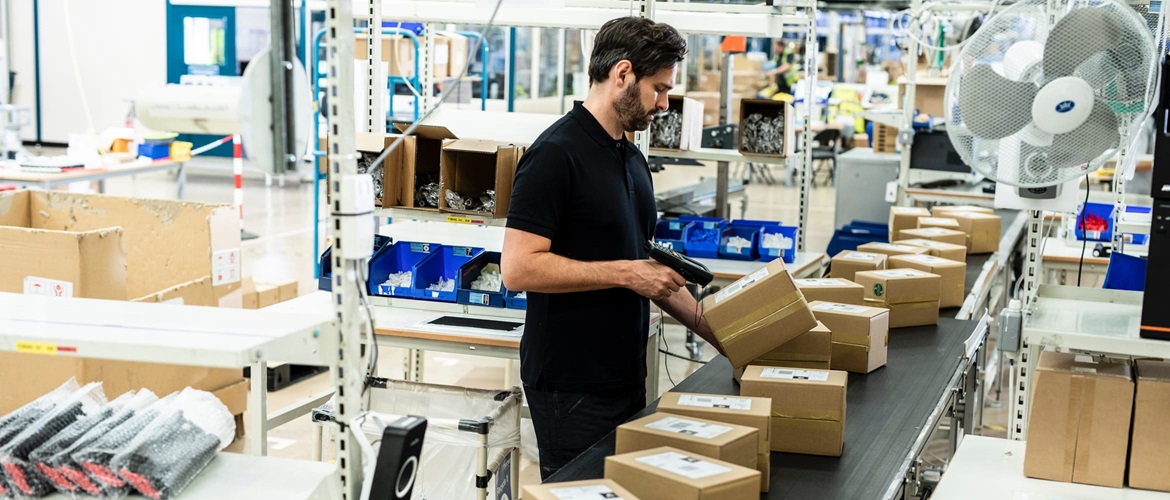
Manual picking involves warehouse employees physically locating products and collecting the required quantities for customer orders. Workers usually follow printed pick lists, hand-held scanners, or instructions from a Warehouse Management System (WMS). This method is common in small and medium-sized warehouses because it requires relatively little investment in specialized equipment.
Key advantages of manual picking include:
1. Lower initial investment:
Businesses can begin operations without purchasing expensive automation equipment.
2. Greater flexibility:
Employees can handle different product types, order sizes, and changing warehouse requirements.
3. Easy implementation:
Manual picking requires limited technical infrastructure and can be introduced quickly.
4. Human judgement:
Workers can identify damaged products or unusual packaging conditions during the picking process.
However, manual picking can become time-consuming when order volumes increase. Employees may also make mistakes, travel unnecessary distances, or struggle to locate products in large warehouses.
What Is Automated Warehouse Picking?
Automated picking uses technology and specialized equipment to select products with minimal manual intervention. These systems may include barcode scanners, conveyor belts, pick-to-light technology, voice-directed picking, and robotic solutions.
Key advantages of automated picking include:
1. Improved accuracy:
Scanning systems and automated instructions help reduce picking mistakes.
2. Faster processing:
Technology can speed up product identification and order preparation.
3. Reduced manual workloads:
Automation minimizes repetitive activities and unnecessary movement.
4. Better scalability:
Automated systems can support increasing order volumes when properly designed.
5. Real-time tracking:
Integrated software provides better visibility into picking progress and inventory movements.
Despite these benefits, automated picking requires investment in equipment, software, maintenance, and employee training.
Manual vs. Automated Picking: Key Differences
The main difference between these methods is how products are identified, located, and collected.
Manual picking depends heavily on employee availability and experience. Automated picking uses technology to improve consistency and reduce repetitive work.
Manual methods are generally more affordable for businesses with limited order volumes. Automated solutions are often more suitable for warehouses handling large numbers of orders and frequent inventory movements.
However, automation does not always eliminate human involvement. Many warehouses combine automated tools with employee supervision to achieve better results.
Conclusion
Both manual and automated picking can support efficient warehouse operations. Manual picking offers flexibility and lower initial costs, while automation improves speed, consistency, and scalability.
A modern Warehouse Management System can further improve either approach by organizing picking activities, tracking inventory, and reducing errors. Choosing the right combination of people and technology helps businesses build a more accurate, productive and cost-effective warehouse.